
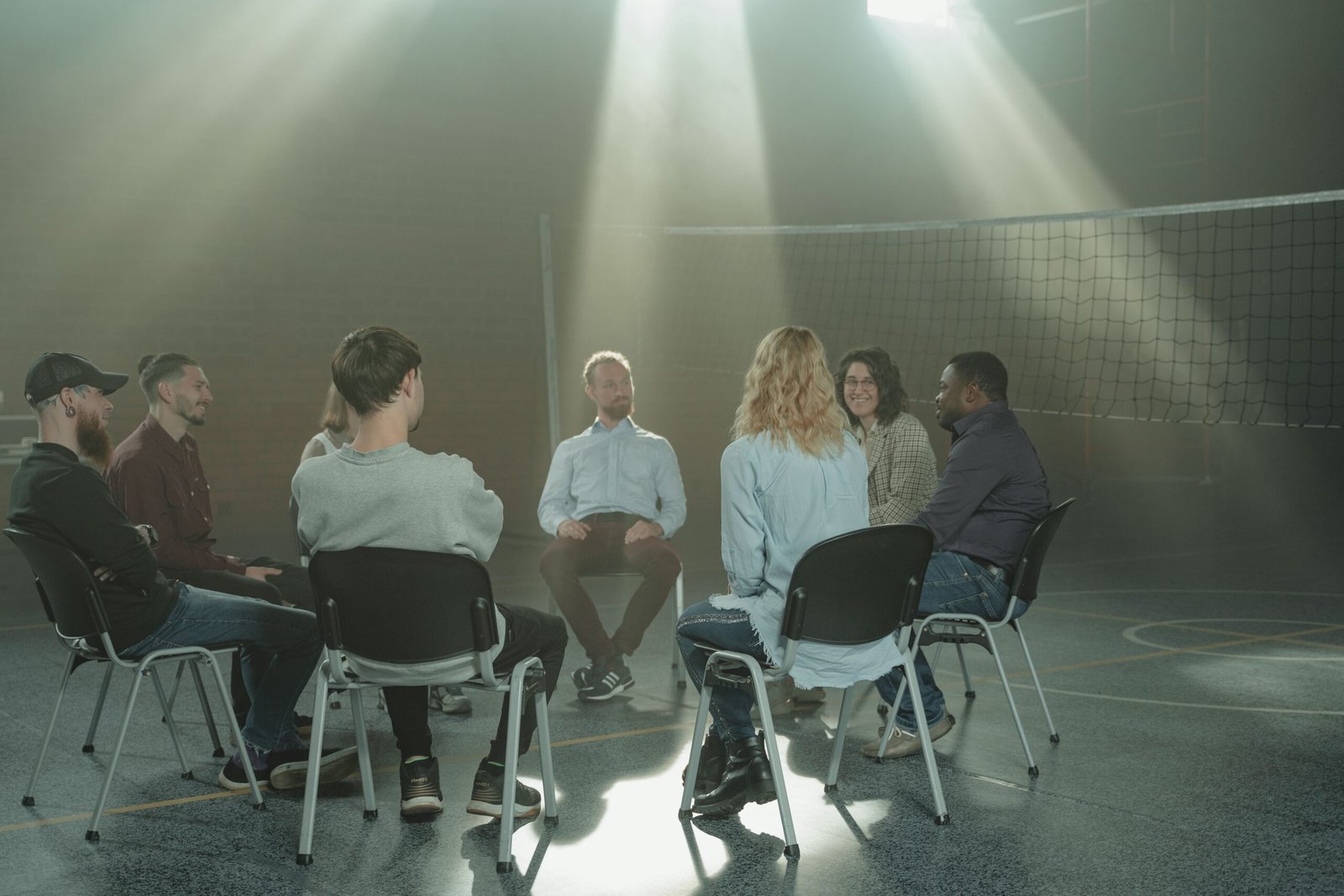
Over the last ten years I’ve facilitated and co-facilitated a wide range of Music Therapy groups, but generally they’ve been a small proportion of my work at any given moment. In some ways I regret this and would like to have done more, but I know there’s good reasons for it. Groups can be really hard to set up from a practical and logistical perspective, especially outside an institutional setting like a school or hospital, and there are often obstacles around funding, resources, timings and venues.
Once a group is up and running, they can be incredibly challenging to facilitate and very difficult to sustain. Balancing structured activities while giving group members an opportunity to take ownership of the sessions – a constant minefield. Allowing tensions and conflicts to play out whilst maintaining a safe space – really hard. Supporting each individual to find their own voice whilst being sensitive to others – complex and delicate. You get the picture. There really is constant jeopardy.
And yet group work is so, so important. After all, for the most part, we exist in groups. We are part of families, friendship groups, schools, workplaces, communities and we often define ourselves in relation to those around us. So when I say that Music Therapy groups are difficult, I’m essentially saying that living with and around other people is difficult. That’s why having therapeutic spaces that bring some of these challenges to the fore, where they can be played out, explored and hopefully understood in a safe way, is crucial.
One challenge I often consider in 1:1 work is how an individual can ‘translate’ the growth and development they are showing within therapy into their day to day life, particularly if they struggle with group situations. And sometimes the differences in behaviour and presentations from them in these contexts are so stark that it feels like 1:1 work is a kind of collusion; a safe bubble where the most painful buttons aren’t pushed, the most delicate triggers aren’t activated and resilience isn’t fully put to the test.
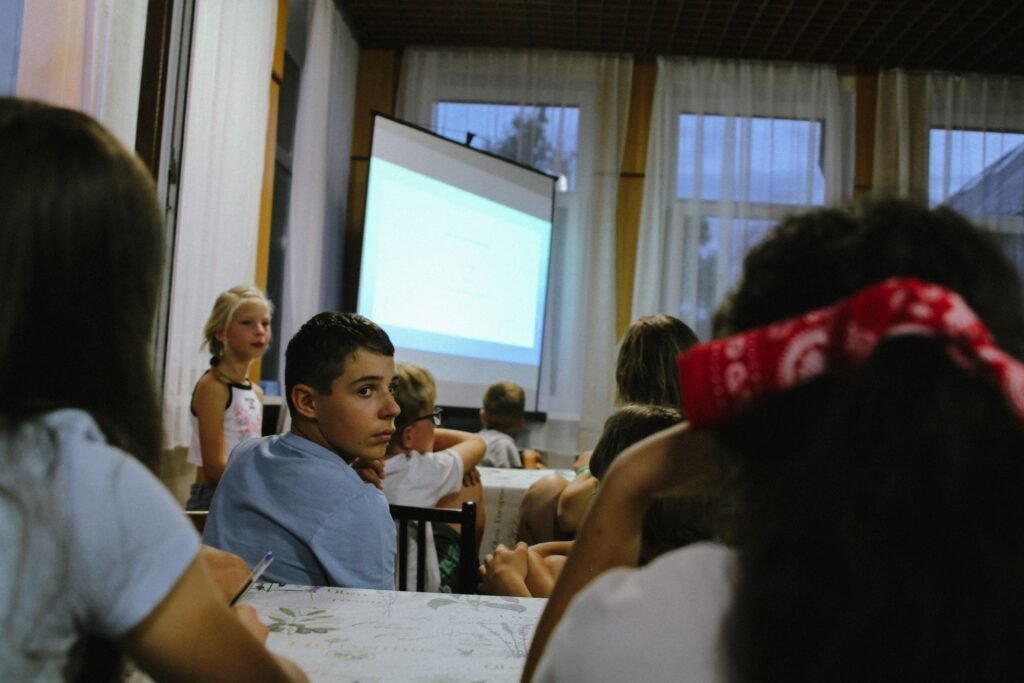
In a school setting for example, I often see how individual sessions can shelter a young person from the self-consciousness, embarrassment, shame, competition, peer pressure, sensory overload and general unpredictability of classroom or playground dynamics. That’s part of the reason for having 1:1 sessions in the first place and it’s incredibly important to have a safe space where that myriad of social forces are not constantly at play. (Disclaimer: those forces can of course be present in 1:1 work too, but when they are I think it’s in a different way.) It’s not that individual work can’t be essential too, and there are so many potential benefits to it, but how can a 1:1 environment possibly be expected to model all the different challenges at play within a communal context?
That’s where therapy groups come into it, because I think it’s groups that offer more opportunities for translation to life outside therapy. There’s a chance for someone to experience the intricate push and pull of group dynamics and wrestle with it to establish a clearer sense of their identity. They can literally play around with different versions of themselves through their communication and interaction (which could take many forms, including musical), all whilst navigating different mirrors and reactions around them. They don’t just reflect on their challenges in group situations, as they might in individual therapy, they live and breathe them in a session. They can then be supported to try out models and blueprints of expression and connection in a group that can then be directly drawn on in other social settings. That’s the theory anyway.
Groups don’t solve everything and, suffice to say, they can go wrong. I’ve had groups that never really got off the ground, groups with very sporadic attendance and engagement, groups that can alienate certain individuals, groups that feel completely stuck or like something’s missing. And it can feel desperate and soul destroying when a group doesn’t work out. Yet when a group does work well, or well enough, there’s so much to be learnt and so much to be gained.
I’ve been talking about doing more group work in and around Thame for a while. Now I’ve gone from talking to writing about it. The next step really is to act, so my mission for 2026-2027 is to set up a group for local children and young people who are currently out of education. Parents of EOTAS (educated other than at school) children have often shared concerns with me about their children’s isolation from peers and increasing social anxiety when they have more time at home. A Music Therapy group won’t solve all of that and is only part of the jigsaw, but for some I hope it can be a really important stepping stone.


